
Areas of Practice
Military Divorce Attorneys in Tampa, Florida
Over 30 Years of Dedicated Experience Protecting MacDill Families Across Hillsborough County
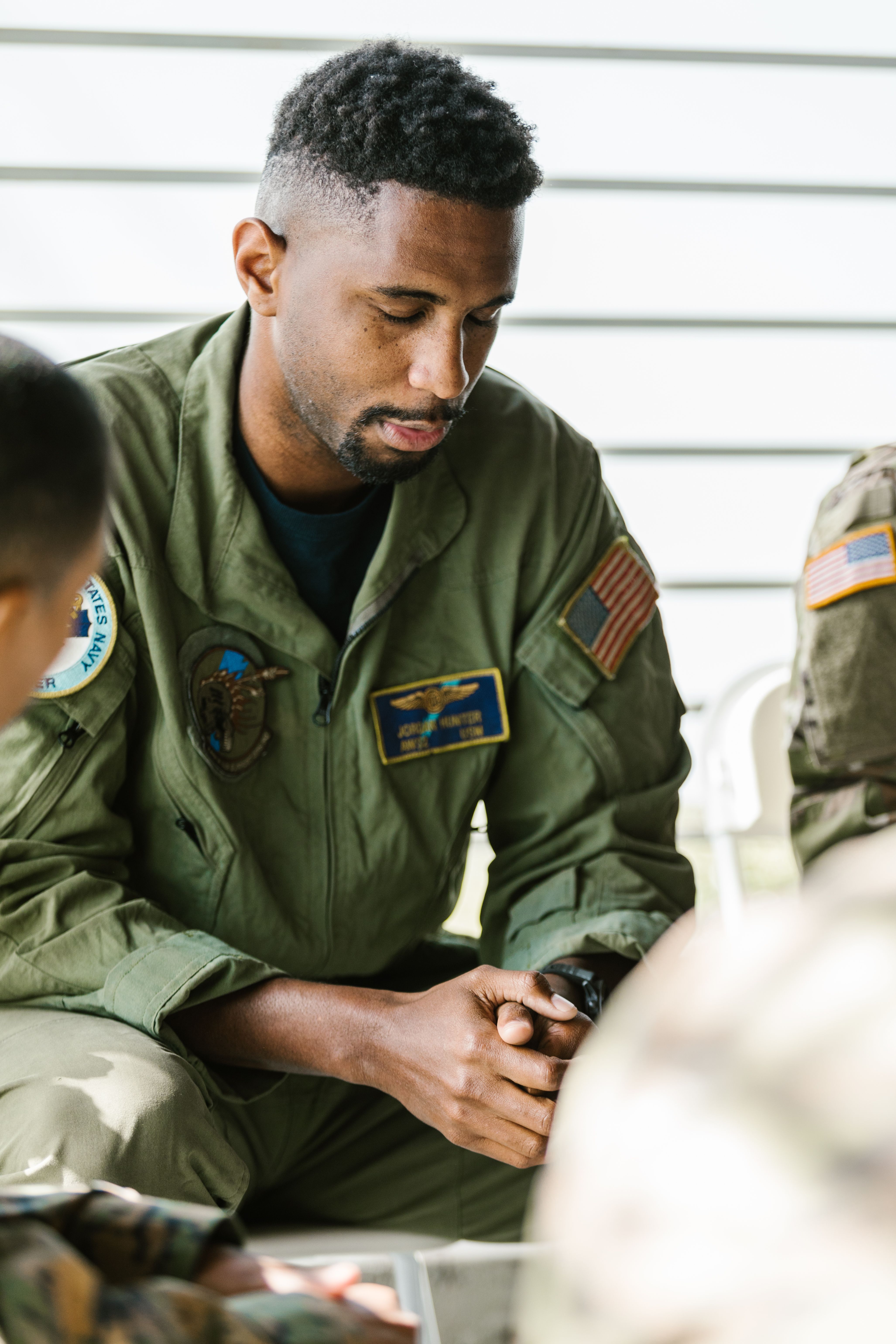
A military divorce is structurally different from a civilian dissolution of marriage. When your life involves deployments, federal benefits, and the distinct culture of service, you cannot afford to rely on generic legal advice.
Schedule Your Confidential Consultation →
Secure virtual consultations are available globally via phone or video for active-duty personnel, TDY assignments, and deployed service members.
At LaFrance Law, each of our lead family law attorneys brings over 30 years of seasoned legal experience navigating the complex intersection of Florida family law and federal military statutes. We understand that military members have unique benefits, command structures, and are subject to laws that do not apply to civilians.
We approach your case with deep compassion, acting as fierce protectors of your financial interests, your military benefits, and your children’s future. Our philosophy is built on double-edged readiness: we prepare every single case as if it is heading to a contested trial, yet we aggressively pursue a peaceful resolution through mediation. By walking into the room fully prepared for the courtroom, we command the leverage necessary to secure a fair, dignified settlement without the emotional and financial toll of prolonged litigation.
Why Military Divorces in Tampa Require Experienced Counsel
Serving at MacDill Air Force Base or navigating life as a military spouse in the Tampa Bay area brings unique logistical realities. Our legal team leverages more than three decades of local and federal experience to navigate the specific laws that civilian lawyers often overlook.
- Compassionate Advocacy, Ironclad Protection: We protect what you have earned. Whether you are an active-duty service member looking to defend your career or a dedicated spouse seeking the stability you deserve, we shield your interests.
- Trial-Ready Preparation, Mediation-Focused Execution: Florida family courts mandate mediation before a trial can be set. Because our attorneys are highly respected trial advocates in Hillsborough County, opposing counsel knows we are fully prepared to litigate. This courtroom readiness allows us to negotiate from a position of strength during mediation, frequently resolving complex disputes without ever needing a judge to intervene.
Meet Your Lead Military Divorce Advocates
You will work directly with veteran trial attorneys who understand the distinct rules of the military structure and the local 13th Judicial Circuit Court system.
Shannon LaFrance | Partner
- Experience: Decades of dedicated Florida family law mastery and courtroom advocacy.
- Specialization: Advanced asset division, military pension valuations, and complex USFSPA litigation.
- Hillsborough County Roots: Deeply familiar with the unique legal needs of MacDill Air Force Base personnel and tactical military operations.
- View Shannon's Full Profile →
Chris LaFrance | Partner
- Experience: Seasoned courtroom advocate and mediation experience in Tampa.
- Specialization: High-conflict custody disputes, interstate military parenting plans, and SCRA stay protections, and branch family support enforcement compliance.
- Philosophy: Combining fierce courtroom advocacy with strategic, peaceful mediation to protect your children’s stability.
- View Chris’s Full Profile →
Driven by a Multi-Generational Commitment to Service
Our firm’s deep dedication to the military community extends far beyond the courtroom, it is rooted in our own family history.
As the proud child of a Naval Aviator who flew jets off aircraft carriers, and the parents of a Captain currently serving in the U.S. Army, our family understands the personal sacrifices, unique rhythms, and logistical realities of military life from the inside out.
We bring this firsthand perspective, profound respect, and over 30 years of seasoned legal experience to every single case, acting as steady, empathetic protectors for your family during times of transition.
Military Divorce & Asset Protection FAQs
Click on any question below to expand the legal blueprint for your situation.
The reality is that a civilian divorce track can permanently compromise your military career and benefits. While Florida’s baseline dissolution process remains the same, military divorces are heavily governed by strict federal statutes that civilian lawyers routinely overlook. A single misstep regarding the Uniformed Services Former Spouses' Protection Act (USFSPA), Survivor Benefit Plans, or active-duty jurisdiction can result in irreversible financial damage. We understand both systems from the inside out to ensure your rights remain completely insulated.
Critical Action Step: Do not let an inexperienced lawyer draft your final decree. Schedule your confidential tactical review today → to ensure your paperwork protects what you have earned.
Yes. If you or your spouse has been continuously stationed at a base in Florida for at least six consecutive months, Florida family courts have absolute jurisdiction over your divorce. Alternatively, if you are currently deployed or stationed overseas but have maintained your Florida driver’s license, voter registration, and legal residency, your case belongs right here in the 13th Judicial Circuit Court.
The 6-Month Child Custody Window: If you have children, Florida requires them to have physically lived in the state for at least 6 consecutive months for the court to rule on a parenting plan. Shifting command orders require an immediate jurisdictional strategy before filing. Connect with our team to verify your proper filing venue →
Yes, you can file, but proceeding without an experienced attorney can completely stall your case or risk severe procedural penalties. Active-duty personnel are shielded by the Servicemembers Civil Relief Act (SCRA), which prevents unfair default judgments and allows deployed service members to temporarily stay or postpone family law proceedings so their focus remains on mission readiness.
Proactive Strategy: If you are a military spouse needing to serve papers, or a service member facing an urgent legal filing while deployed, tactical handling is mandatory to manage these statutory extensions smoothly. Let us review your active orders and deploy a secure legal timeline →
No. Federal law strictly dictates that Department of Veterans Affairs (VA) Disability Compensation is non-divisible marital property; it belongs entirely to the veteran and cannot be split as an asset or pension. Your former spouse cannot be awarded a direct percentage of your disability rating under the USFSPA.
The Critical Financial Trap: While VA benefits cannot be divided as property, Florida family courts do count VA disability compensation as gross income when calculating alimony and child support guidelines. If your attorney doesn't understand this distinction, your support calculations will be inaccurate. Let our legal advocates properly structure your VA income disclosures →
Much like VA Disability, Combat-Related Special Compensation (CRSC) is completely exempt from asset division and cannot be divided like a standard military pension. It is a focused federal benefit designed specifically to replace retired pay waived for combat-related disabilities.
Urgent Financial Warning: Because CRSC shifts funds out of the divisible pension pool, an unguided divorce can leave a spouse with zero retirement income, or drag a service member into a costly high-conflict dispute. Furthermore, while it isn't divisible property, Florida courts still treat CRSC as part of your overall financial ability when determining child support and spousal maintenance. Speak to us immediately to analyze your retirement and special pay streams →
There is a dangerous, widespread myth that if a marriage lasted less than 10 years during active service, a spouse is completely barred from the military pension.
- The Real Law: Florida courts retain full authority to divide a military pension as a marital asset regardless of whether you were married for 2 years or 20.
- The Reality of the 10/10 Rule: This 10-year threshold is purely an administrative metric for the Defense Finance and Accounting Service (DFAS). If met, DFAS pays the spouse their awarded portion directly. If not met, the pension award remains entirely valid, but the service member must pay the spouse indirectly. We ensure precise math to safeguard your true disposable retired pay. Request a formal valuation of your pension and Thrift Savings Plan →
The entry of a final divorce judgment is a definitive "qualifying event" that instantly terminates a spouse's military insurance coverage unless strict federal statutory thresholds are met.
- The 20/20/20 Rule: If you were married for at least 20 years, your spouse served for at least 20 years, and there is a 20-year absolute overlap, the former spouse is entitled to permanent TRICARE coverage, commissary access, and exchange privileges.
- The 20/20/15 Rule: If the overlap between the marriage and military service is at least 15 years (but under 20), the former spouse is only eligible for one single year of transitional TRICARE coverage.
Don't Risk a Coverage Gap: Missing these markers by even a few weeks can result in a sudden catastrophic loss of healthcare. We help families plan long-term health insurance transitions seamlessly before final orders are signed. Ensure your medical coverage is fully locked in →
The Survivor Benefit Plan (SBP) is a vital annuity that keeps a military pension active for a former spouse even after the service member passes away. Without an explicit SBP allocation in the divorce, your pension access dies with your ex-spouse.
The 1-Year Strict Deadline: Securing former spouse SBP coverage requires hyper-specific language within your final Florida divorce judgment. Furthermore, federal regulations demand that a formal "Deemed Election" request be filed with DFAS within exactly one year from the date of the divorce. If your attorney misses this non-negotiable deadline, the benefit is lost forever. Have our focused legal team secure your SBP rights today →
Absolutely. Deployments do not pause your financial duties, and waiting for a Florida judge to issue a formal child support ruling can ruin your military career. If a separation occurs, individual military branches enforce strict, command-driven interim support regulations (such as Army AR 608-99 or Air Force DAFI 36-2906) that heavily penalize service members via the UCMJ if ignored.
The Financial Shock: These command rules are automated, aggressive stopgaps that frequently drain a service member's paycheck far more than actual Florida guidelines would. LaFrance Law immediately steps in to move you away from automated branch formulas and transition your family to an equitable, legally binding order in the Hillsborough County court system. Request an emergency support calculation review →
No. Florida law provides an absolute protective shield for service members under Sections 61.703 – 61.773, Florida Statutes. A judge cannot permanently strip your parental time-sharing rights based solely on an active deployment or temporary relocation order.
The Designation Right: If you are deployed or assigned to duty for more than 90 days, Florida law allows you to designate a close family member (such as a grandparent or stepparent) to step into your shoes and exercise your time-sharing rights on your behalf, keeping your bond with your child intact. We build flexible, long-distance military parenting plans that automatically scale to shifting command structures and sudden PCS moves without triggering a custody battle. Let's build your ironclad military parenting plan →
Protect Your Career, Family, and Future
Do not navigate the complexities of federal military statutes and Hillsborough County family courts alone. Whether you are preparing for an upcoming deployment, stationed at MacDill Air Force Base, or currently deployed overseas, our 30+ years of local mastery is on your side.
We understand that military life rarely stands still. To ensure seamless access to highly qualified legal representation, we offer completely secure, confidential virtual consultations from anywhere in the world.
Request a Virtual or In-Person Consultation →
Or call our downtown Tampa office directly at (813) 930-5542. We accommodate changing schedules and time zones to protect your interests when it matters most.
Related